
Keeping a Global Developer Conference Captioned and On Air, No Matter What
For nearly five years, we've built the live captioning systems behind one client's flagship virtual developer conference, a major tech company with a genuine, long-standing commitment to accessibility. This event raised the bar again.

Remote production workstation with multiple monitors running show graphics and a live video call.
The Challenge
The broadcast mixed live and pre-recorded content, all captioned in real time by a human stenographer, for an audience that relies on those captions being accurate and always available. Two things had to hold no matter what: the internet connection from studio to YouTube couldn't have a single point of failure, and the captions needed to be embedded as broadcast-standard data, not routed through YouTube's built-in captioning tool, which had proven unreliable with inconsistent timing on past shows. For a client this committed to accessibility, captions weren't a nice-to-have. They had to work every time.
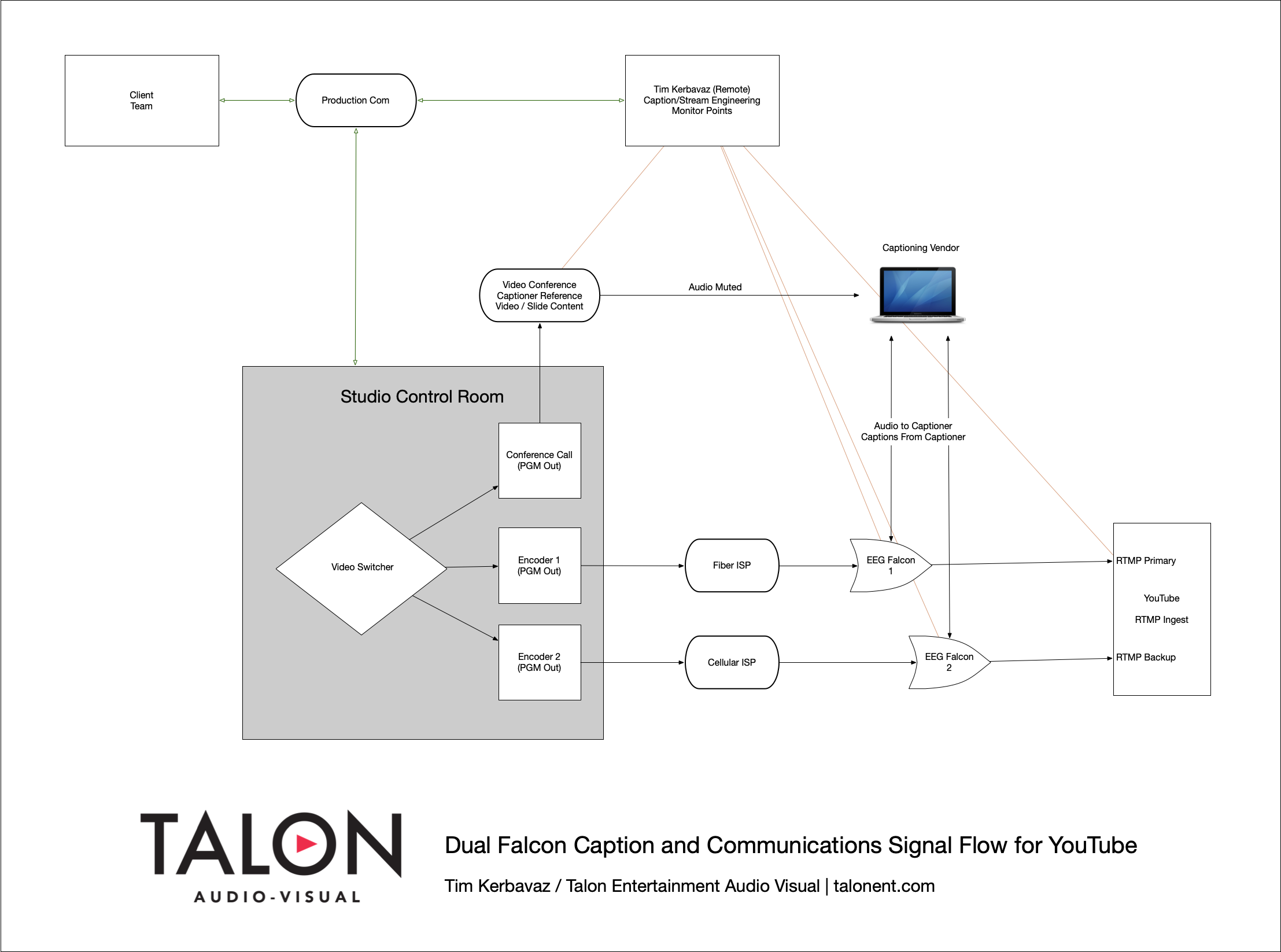
The team engineered a dual-path streaming and captioning system built around two cloud-based caption encoders. The primary signal ran over hardline fiber for a rock-solid connection, while a second encoder fed a backup path over cellular LTE, so if the network dropped, the stream and its captions kept going without anyone noticing.
The Details
Client: Confidential, a major technology company and long-time client
Location: Remote production, broadcast to a global virtual audience
Event Type: Recurring Virtual Developer Conference
Duration: Multi-day live broadcast
Services: Live closed captioning engineering, redundant streaming infrastructure, broadcast accessibility
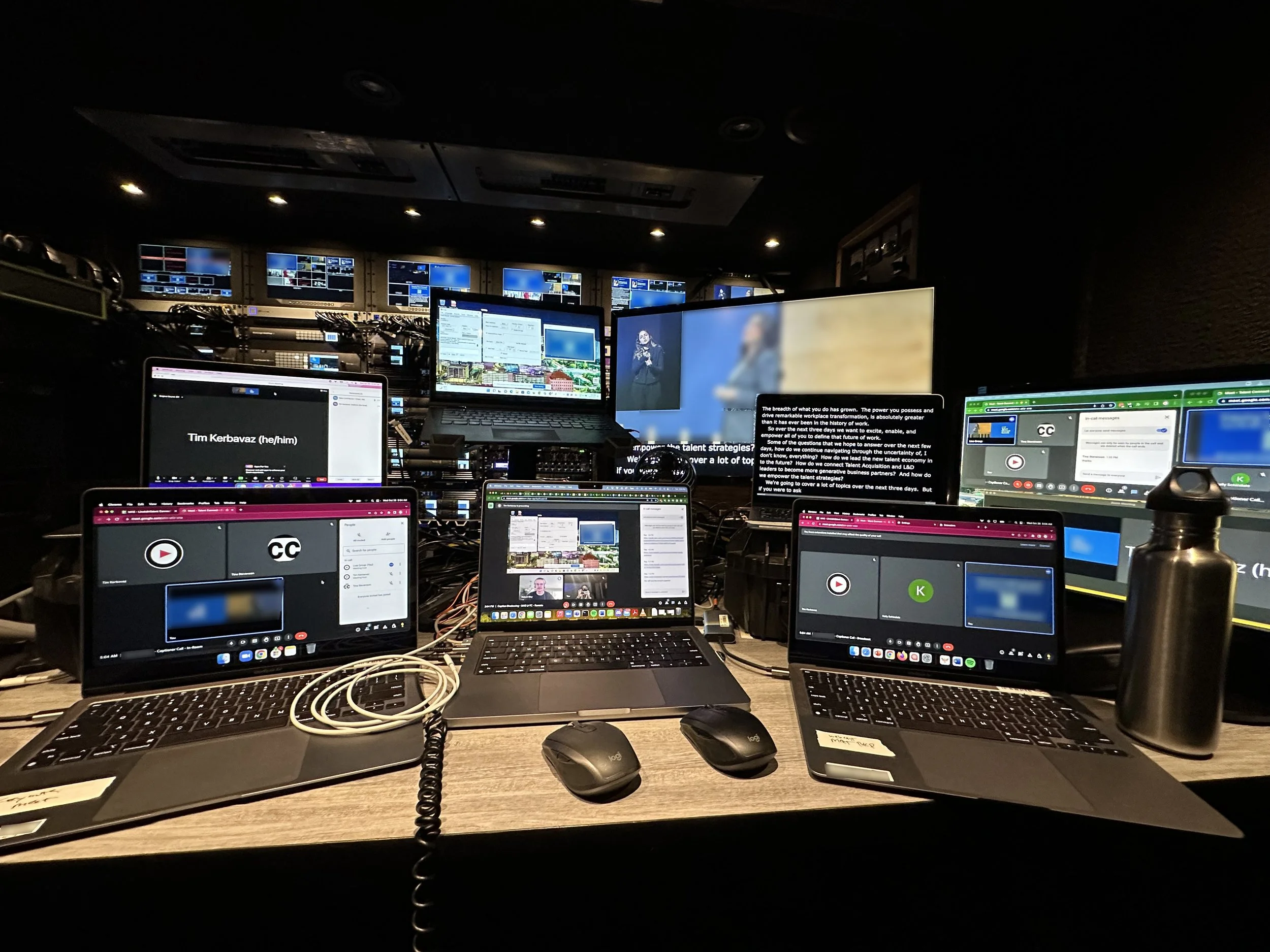
Multi-screen production desk, running live video feeds, captions, and show data.
How We Solved It
Redundancy and accessibility both had to be built into the system from the ground up, not bolted on afterward.
Built two independent signal paths, primary over hardline fiber and backup over cellular LTE, so a dropped connection never took the stream down
Fed both paths into YouTube's primary and backup ingest points, so the platform could auto-negotiate failover instantly if needed
Used two cloud-based caption encoders to embed real-time captions as broadcast-standard metadata directly in the stream, instead of relying on YouTube's less consistent built-in captioning tool
Captioned all live and pre-recorded segments in real time with a professional stenographer, giving viewers accurate closed captions they could turn on or off
Mapped the full signal flow from studio to CDN, so every handoff in the system had a backup
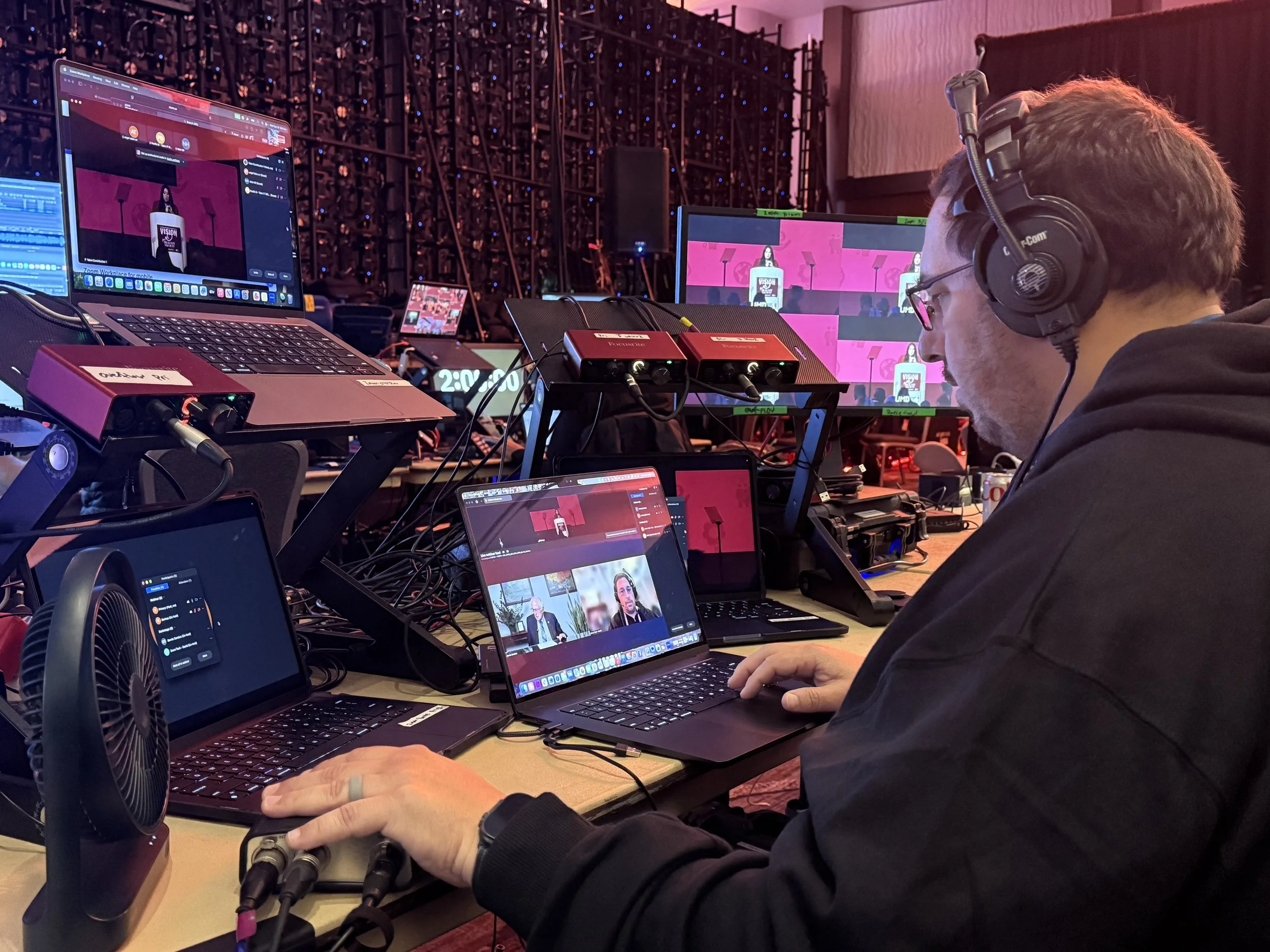
Talon AV crew member operating laptops at a production desk, with LED video backdrop and pink stage visuals behind.
The Outcome.
The broadcast ran the full event without a dropped connection or a caption failure. Viewers got reliable, accurate closed captions throughout, exactly as promised, and the client's accessibility commitment held up under the pressure of a live, global audience. Open captions stayed what they were meant to be: a fallback that was never needed.