
Keeping a Music Festival Alive When the World Went Virtual
Mutek San Francisco was gearing up for its third annual festival when the pandemic hit, and the team had to decide:
Do we cancel the show? Or do we pivot?
Pivoting was the theme of 2020, along with bringing in-person events online.
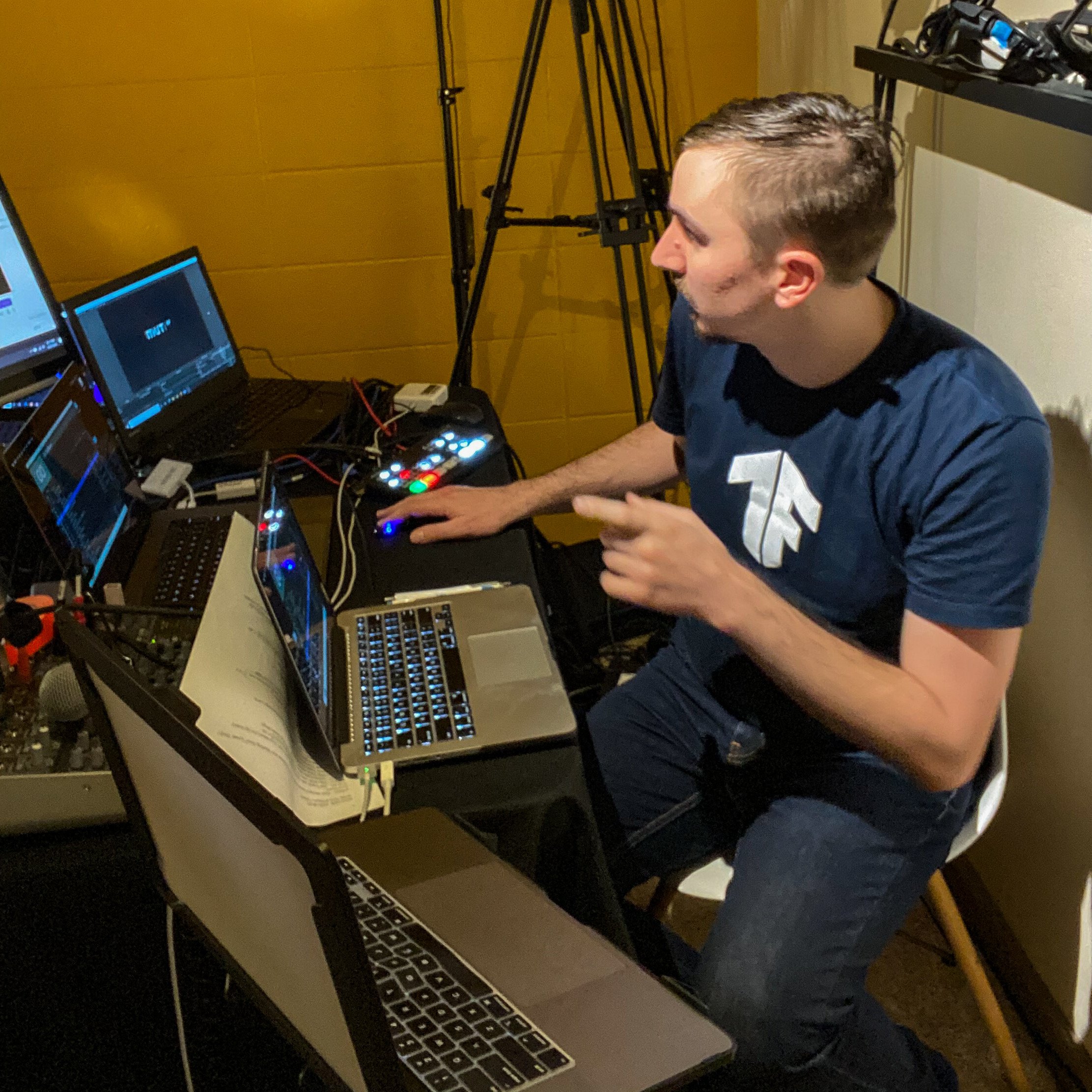
Talon AV crew member operating a multi-laptop live stream control station, script and lighting board in view.
The Challenge
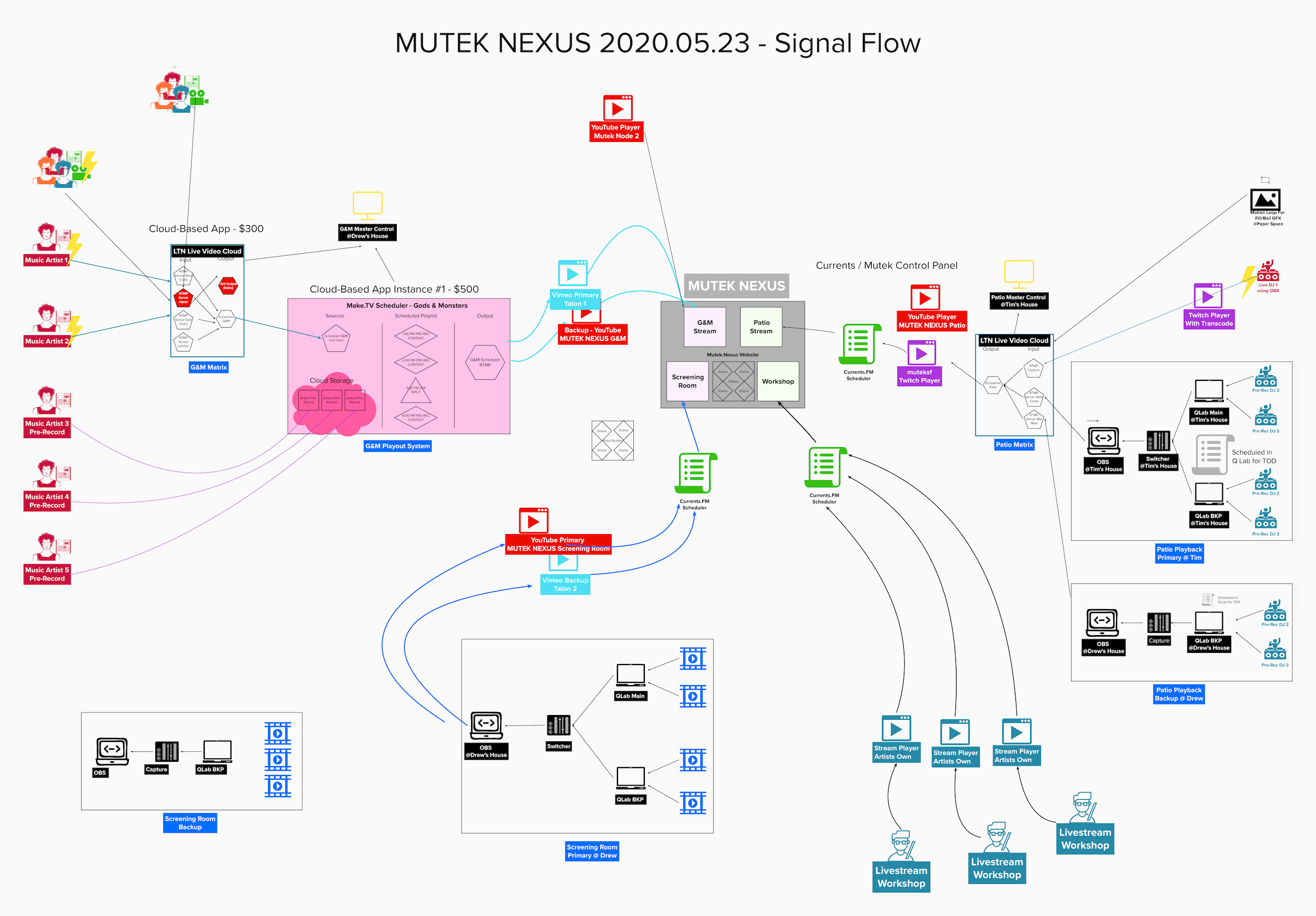
Mutek chose to build something new instead of canceling. The result was Nexus, a virtual festival with four live "rooms" running at once, mixing live performances streamed from artists' homes, pre-recorded sets on a timed schedule, a film screening room, and live workshops. Content was coming in from contributors all over the world and needed to go out cleanly to a custom-built audience platform, with no dropped streams and no missed cues. It was a live show with no venue, no shared room, and no room for error.
This is the kind of problem streaming expertise was built for. So the answer was easy.
Mutek's technical director John Mitchell brought in streaming engineers Drew Patterson of Fresh AV and Tim Kerbavaz of Talon AV to lead the live streaming and virtual event management, with Fresh AV's Jessie McDaniel handling show-day artist and stage coordination. Between them, the team spun up redundant playback systems in Texas and California, backed by cloud-based routing, so a group of technicians spread across two states and three metro areas could run one show together.
The Details
Client: Mutek San Francisco
Location: Virtual, with production teams in Sacramento, Texas, and California
Event Type: Virtual Music and Digital Arts Festival
Duration: Multi-day live festival
Services: Live streaming engineering, virtual event technical management
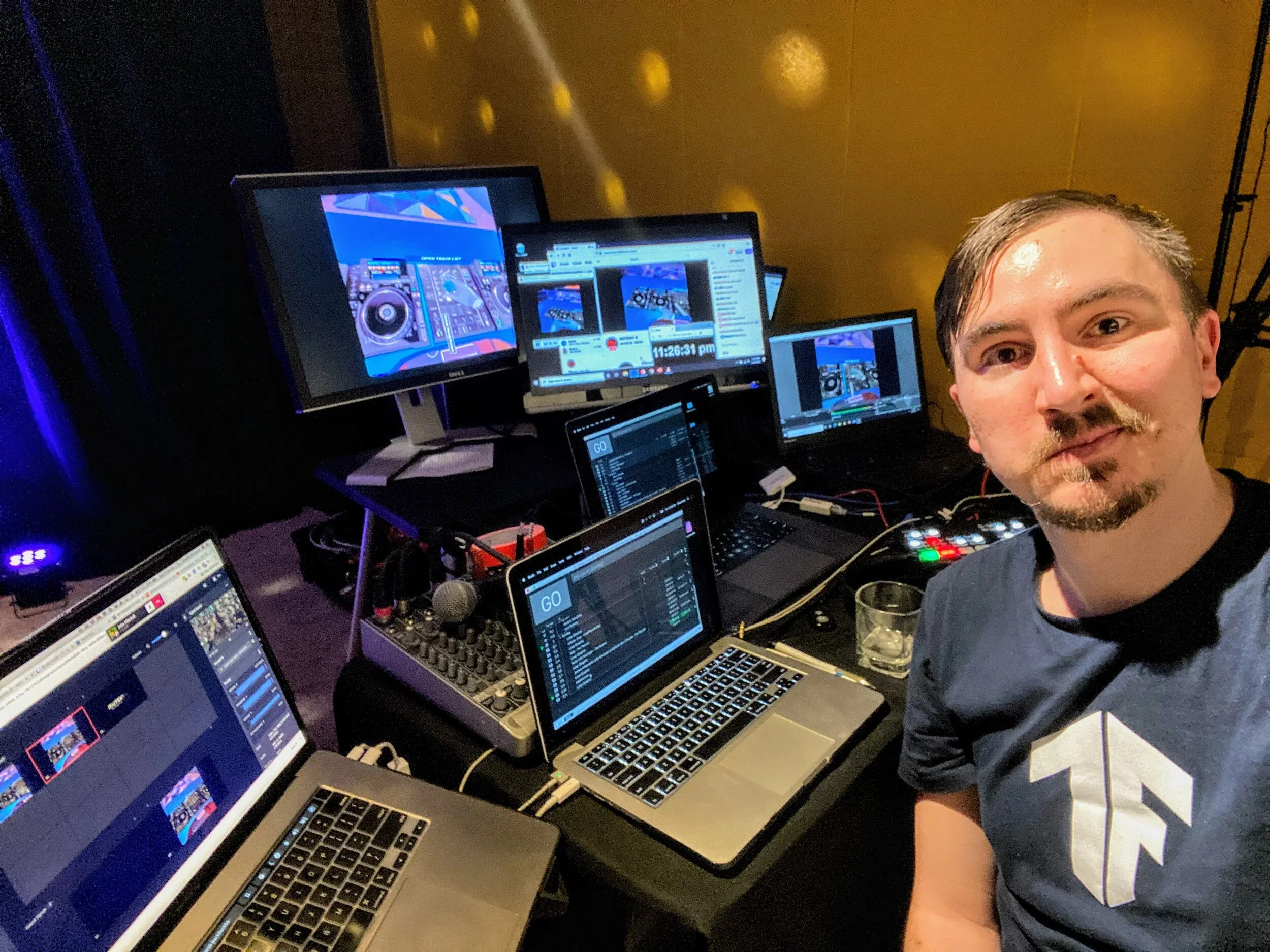
Multi-monitor streaming control desk with DJ visuals, audio mixer, and multiple laptops running live show software.
How We Solved It
There was no physical venue to build the show around, so the team built the show around the cloud instead.
Cloud-based video routing managed and recorded live contributions coming in from artists' homes around the world
A cue-based playback system handled the timed rollout of pre-recorded performances, so scheduled content played exactly on time
Redundant playback locations in Texas and California kept the show running even if one system had trouble
Time-based scheduling tools made it possible to run four live rooms on independent timelines without anyone losing track of the schedule
Streams went out simultaneously to multiple platforms, so audiences could watch wherever they already were
Remote coordination let technicians in three different metro areas run the show together as one team
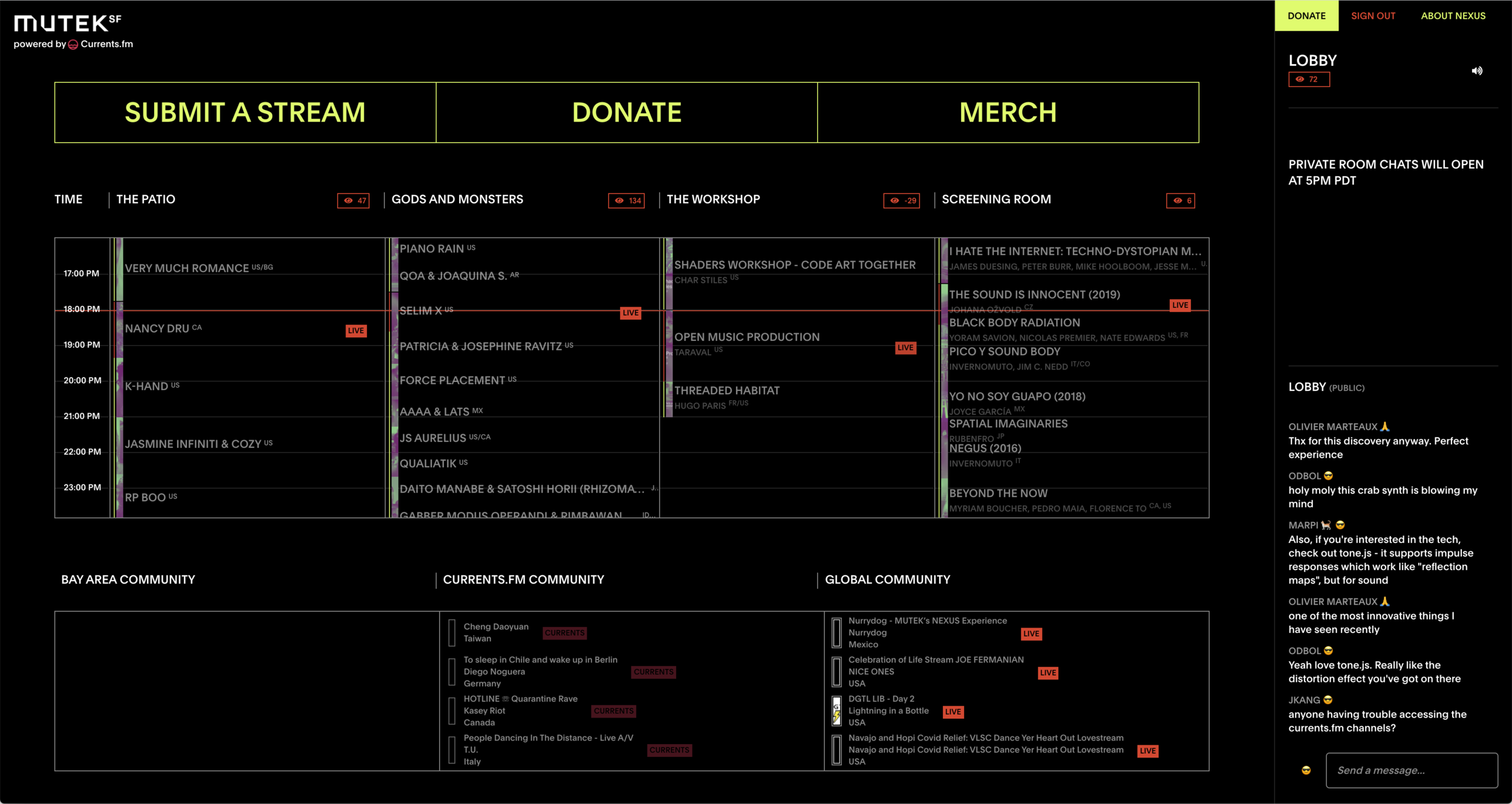
Screenshot of the Mutek SF virtual festival platform showing a multi-stage schedule and live community chat.
The Outcome
Nexus went on as planned, giving the Mutek community a live festival experience when an in-person one wasn't possible. The distributed team ran four concurrent live rooms without a hitch, proving that a festival built entirely from remote pieces could still feel like one connected event.